Management Representation Letter Audit: What to Know
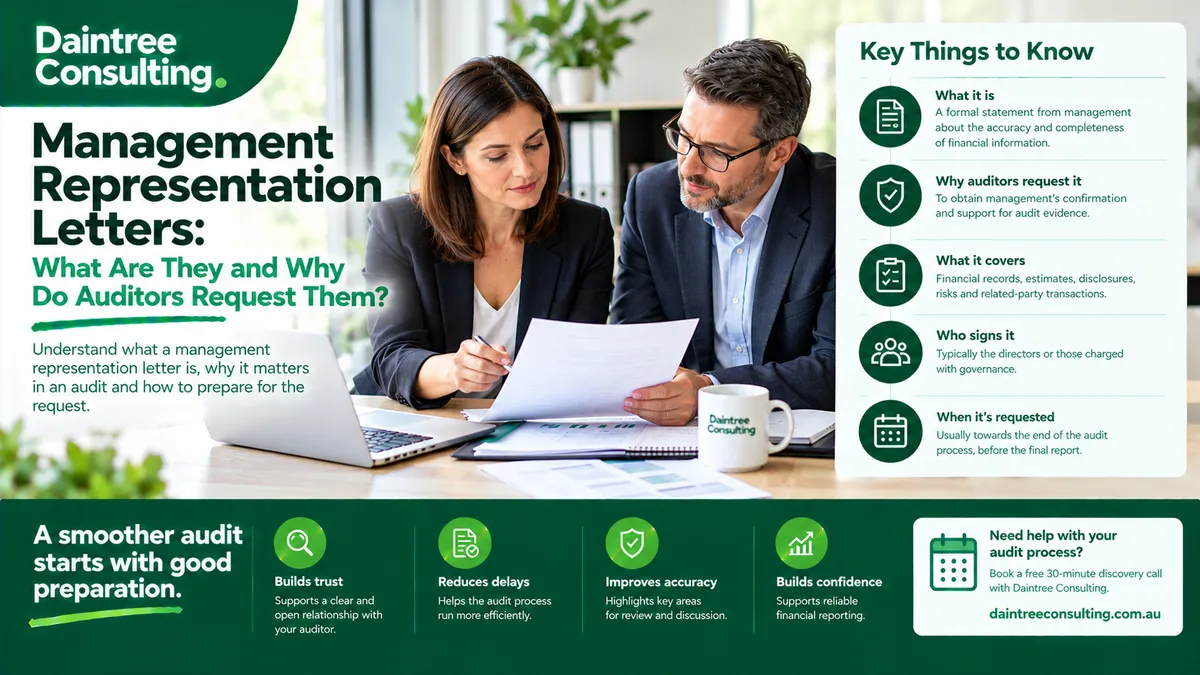
Understand what a management representation letter means in an Australian audit, why auditors request it, what management confirms and how to prepare.

Understand what a management representation letter means in an Australian audit, why auditors request it, what management confirms and how to prepare.

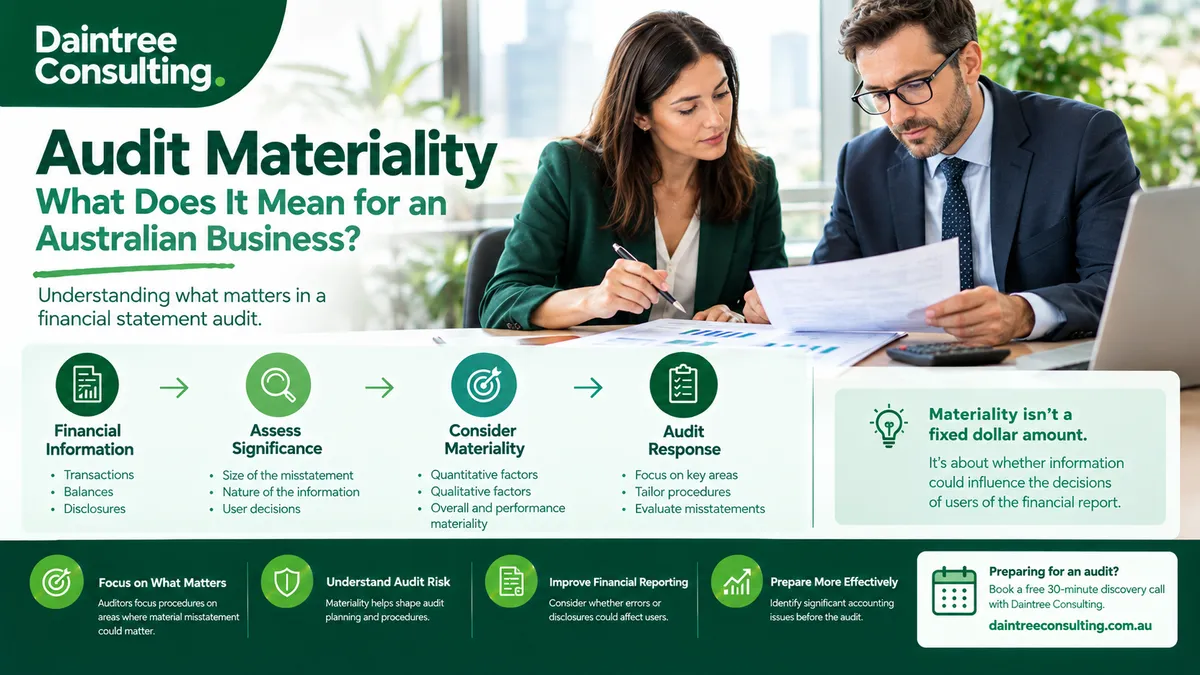
Understand audit materiality in Australia, including how auditors assess errors, disclosures, performance materiality and the potential effect on financial statements.

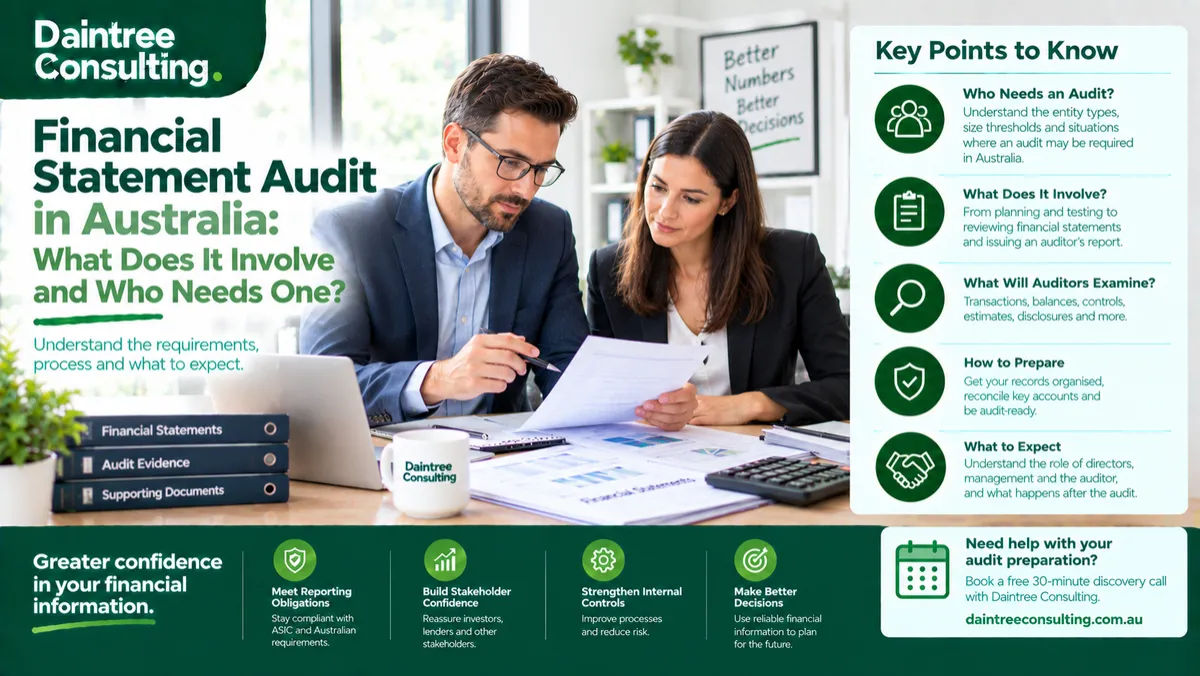
Understand who may need a financial statement audit in Australia, what the audit involves, what auditors examine and how businesses can prepare.

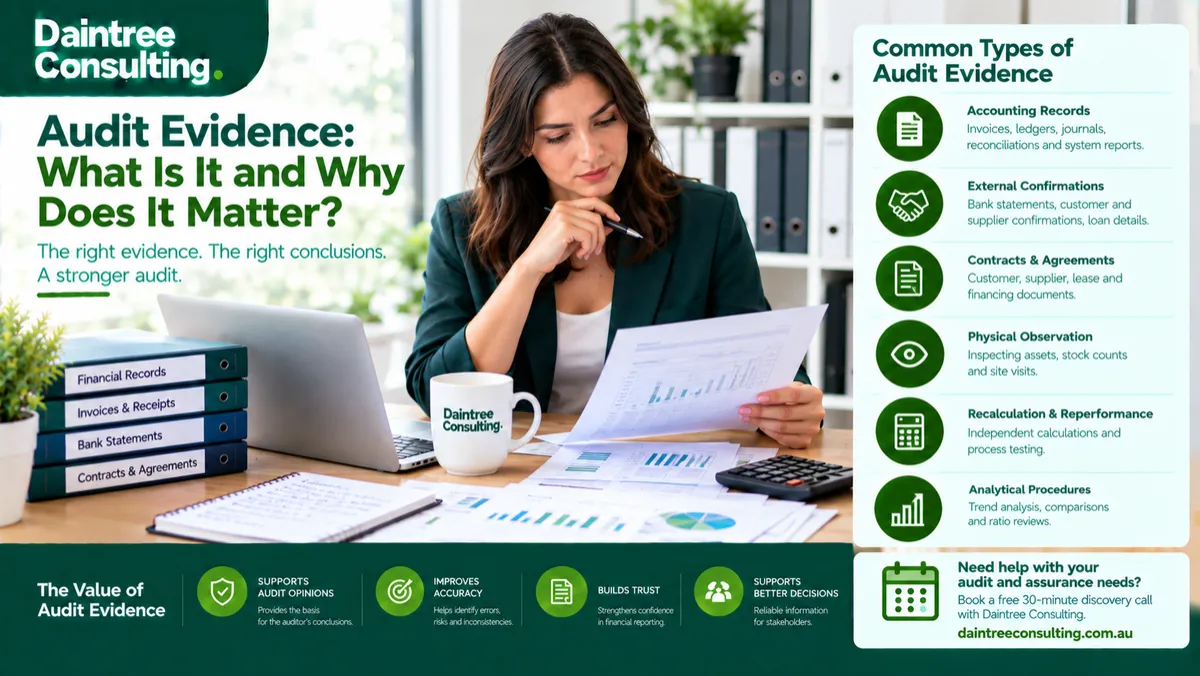
Understand what audit evidence is, the different types auditors use, what makes evidence sufficient and appropriate, and why reliable records matter during an Australian audit.

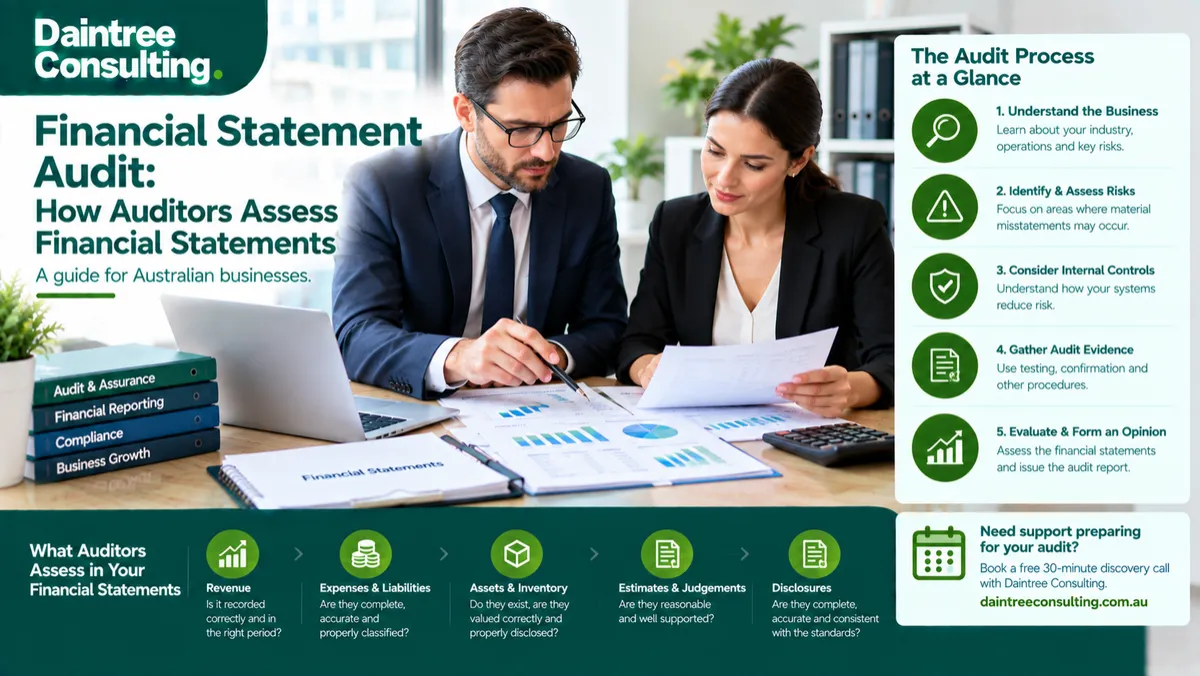
How do auditors assess financial statements? Learn how Australian auditors evaluate financial reporting risks, internal controls, audit evidence, estimates, disclosures and material misstatements.

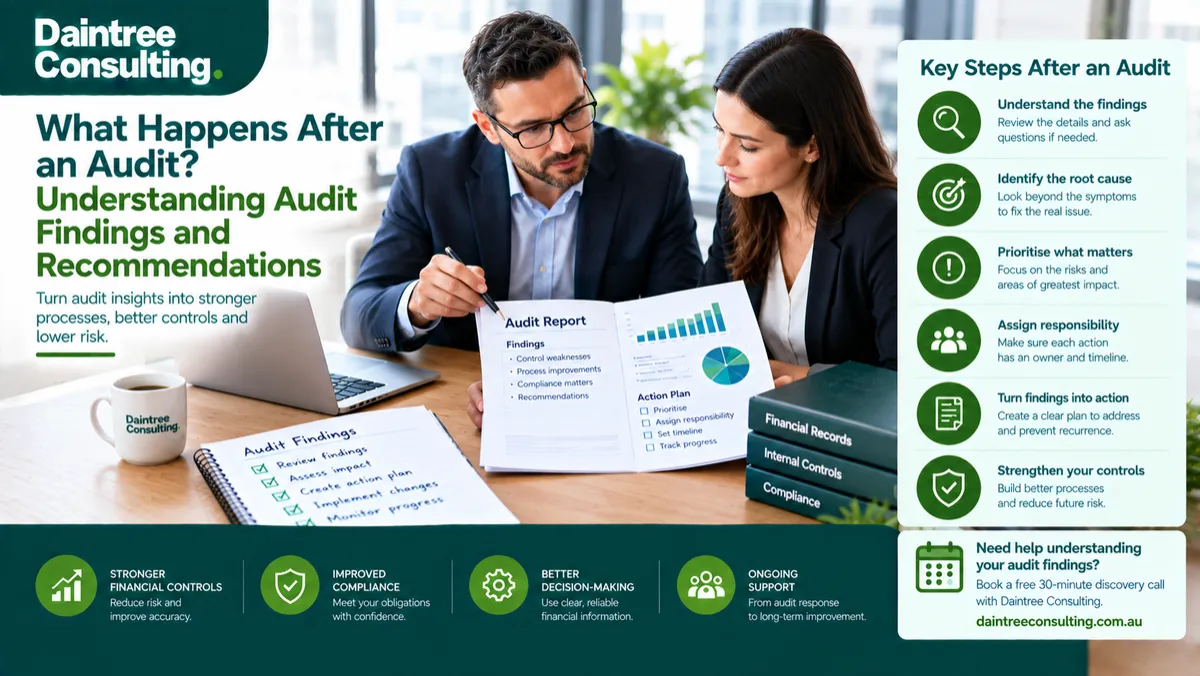
What happens after an audit? Learn how Australian businesses can understand audit findings, prioritise recommendations, address control weaknesses and improve financial processes.

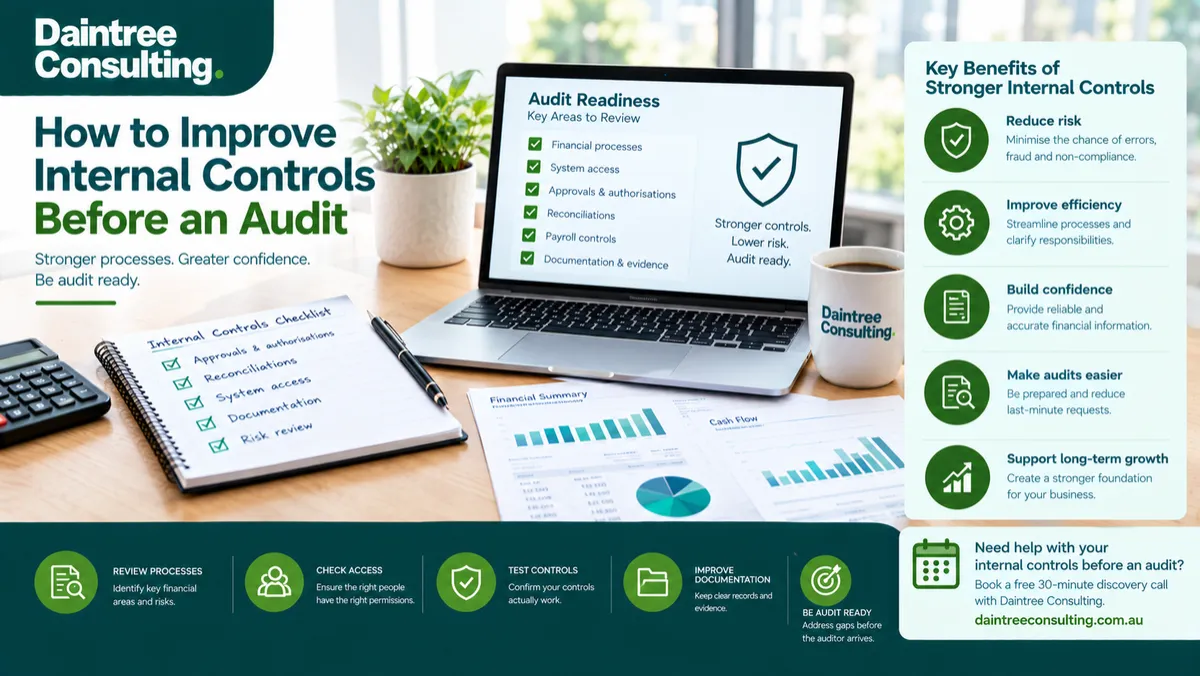
Preparing for an audit? Learn practical ways to review and strengthen internal controls, from payment approvals and system access to reconciliations and documentation.

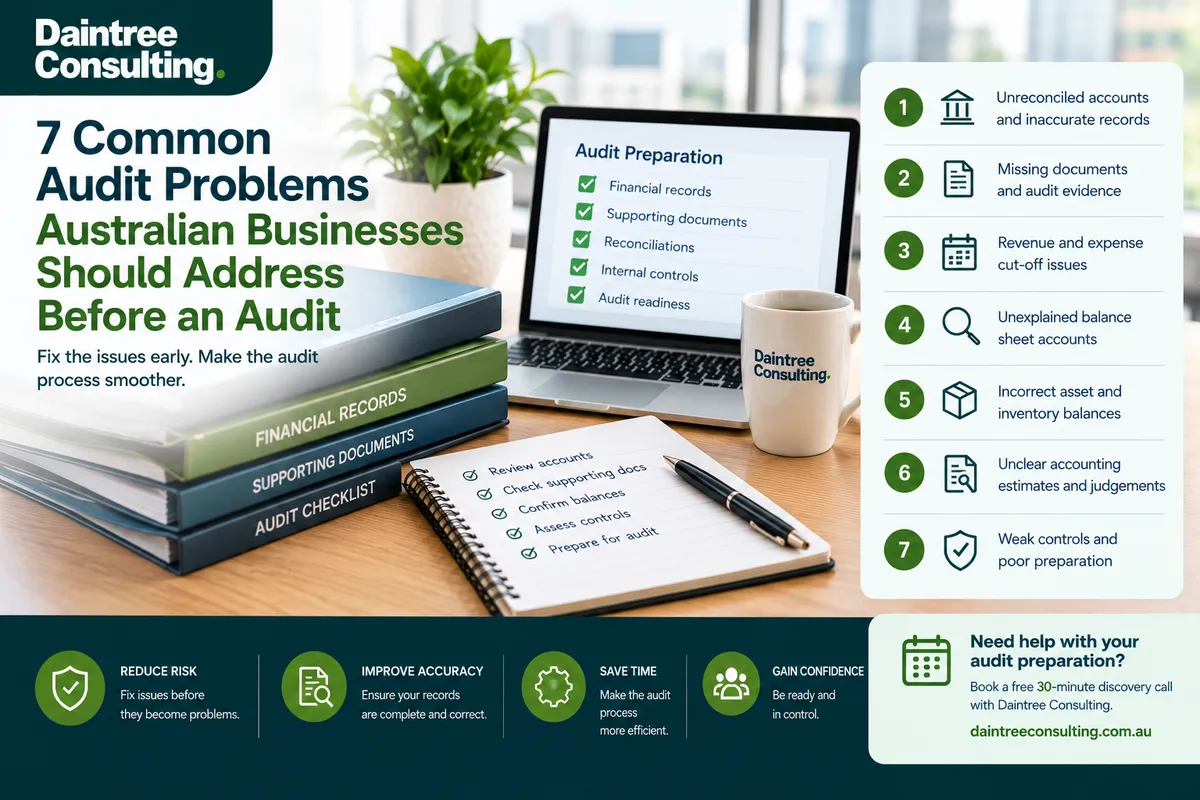
Learn the 7 common audit problems Australian businesses should address before an audit, including reconciliation issues, missing evidence, weak controls and reporting errors.

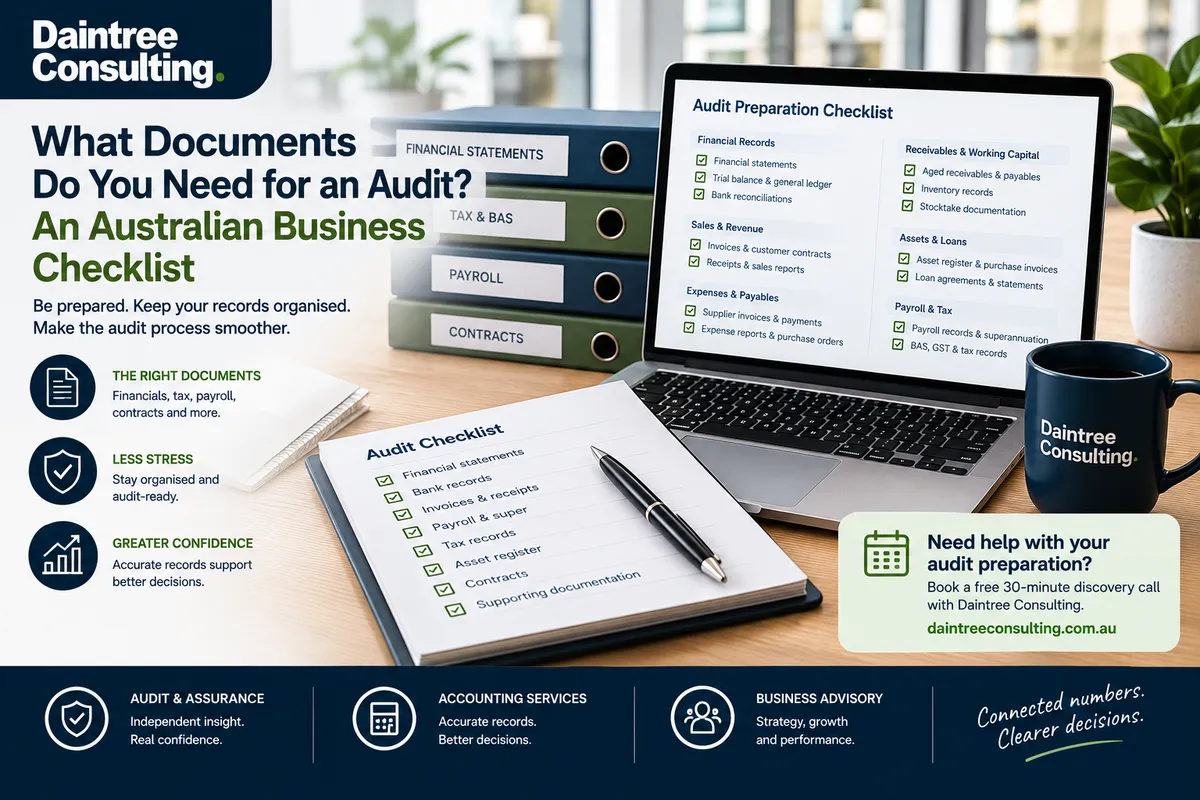
Discover which documents Australian businesses may need for an audit and how to organise financial records, supporting evidence and key business documentation before the audit begins.

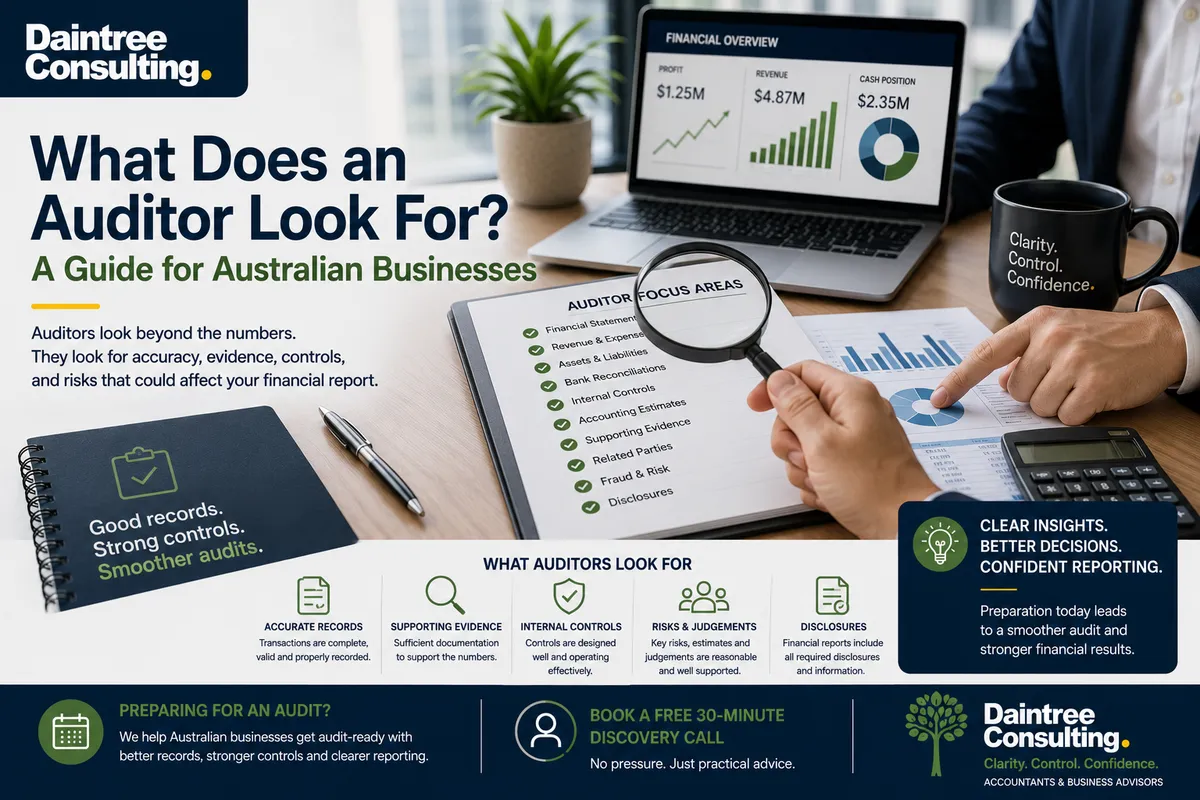
Learn what an auditor looks for in an Australian business, from financial records and internal controls to supporting evidence, accounting estimates and audit preparation.

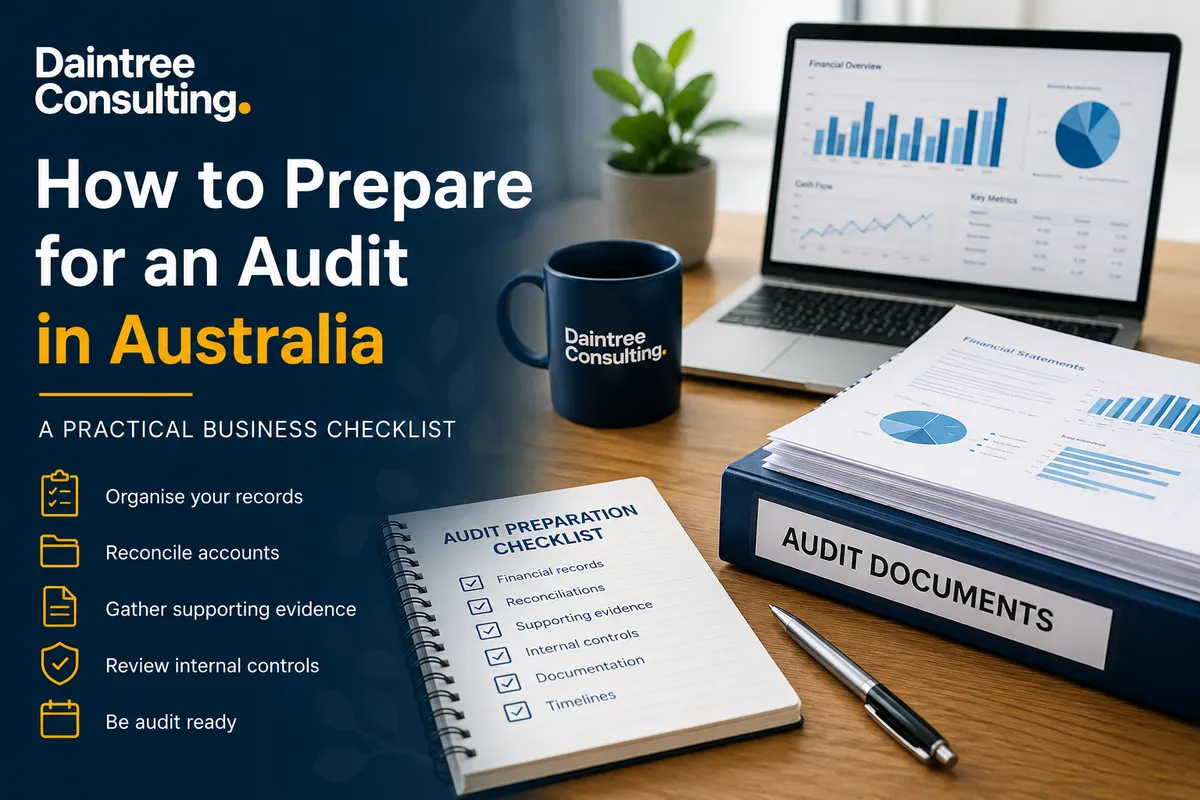
Meta Description / Post Description: Preparing for an audit in Australia? Use this practical checklist to organise financial records, reconciliations, supporting evidence and internal controls before your audit begins.